Claude Computer Use: what it means for GEO
When AI stops reading your content and starts using your product

Something quietly significant happened when Anthropic shipped Computer Use into Claude Code. It didn't get the splashy consumer launch. No keynote. No countdown timer. But for anyone paying attention to how AI systems interact with the web, it represents a genuinely different category of behavior.
Claude can now look at a screen, interpret what it sees, and take action. Click buttons. Fill forms. Navigate interfaces. Extract structured data from visual layouts. This is not retrieval-augmented generation. This is an AI agent operating like a junior analyst who has been handed a browser.
So what does that mean for your brand visibility, your GEO strategy, and how AI systems perceive and recommend you?
What Computer Use actually does
Computer Use is a capability that allows Claude to interpret screenshots and interact with graphical interfaces programmatically. In the Claude Code environment specifically, this means developers can instruct Claude to perform tasks that require visual reasoning, not just text parsing.
Practically: Claude can visit a webpage, read its visual layout, extract information unavailable in raw HTML, and take action based on what it sees. According to Anthropic's documentation, the system uses a combination of screenshot analysis, coordinate-based clicking, and keyboard input to simulate how a human would operate a computer.
As of early 2025, Claude 3.5 Sonnet and later models support this feature in the API, with adoption growing rapidly among developer teams building autonomous research and data-gathering workflows.
Why GEO professionals should care
Most GEO thinking so far has been about text. How does your content appear in training data? How does your site structure help AI models extract clean, citable information? How do entities in your copy align with how AI systems model your category?
All of that still matters. But Computer Use adds a new layer: AI agents that behave like users.
Consider three scenarios that are already happening:
- Autonomous research agents scraping competitor pricing pages, feature comparison tables, and review summaries to synthesize recommendations
- Procurement bots visiting SaaS websites to evaluate positioning, trust signals, and available documentation before surfacing vendor recommendations
- Content verification agents cross-referencing claims made in AI-generated answers against live web pages
In each of these scenarios, your website is being evaluated not just as text, but as an interactive artifact. The visual hierarchy, the clarity of your value proposition above the fold, the accessibility of your pricing and case study pages, all of it becomes signal.
According to a 2024 survey by Botify, 43% of enterprise SEO teams reported that bot and agent traffic from AI-related crawlers had increased measurably year-over-year (Botify, State of Technical SEO 2024). That number has only accelerated since Computer Use became production-ready.
The GEO implications, broken down
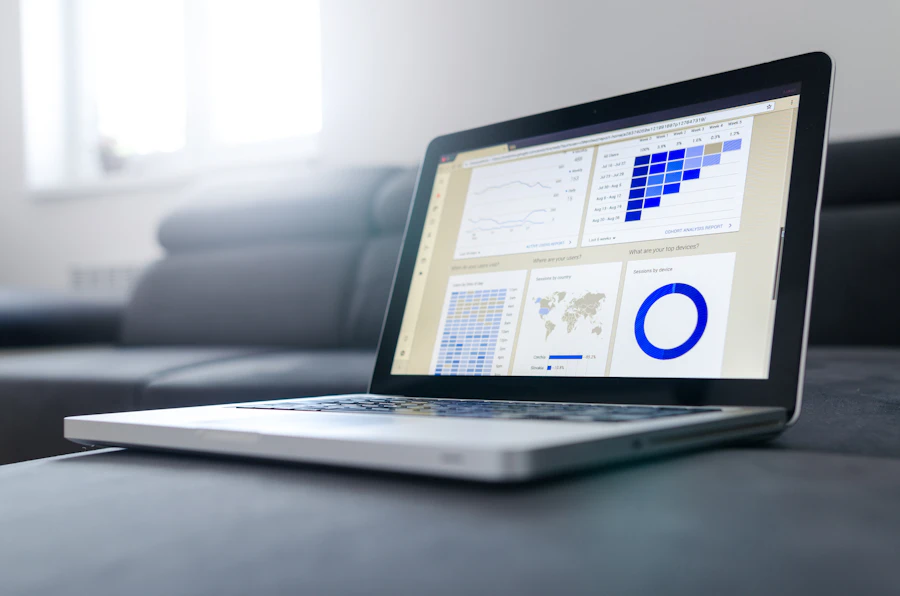
Visual Clarity Is Now an AI Signal
When Claude takes a screenshot of your homepage, it does not parse your CSS. It interprets the visual layout the way a human would. If your primary value proposition is buried below the fold, or your navigation is cluttered with 12 items, an agent trying to understand what your product does may fail to extract the right information.
This is a new kind of technical SEO problem: visual legibility for AI agents.
Structured Data Still Wins
Here is where classic GEO best practices get reinforced. Agents using Computer Use are still more reliable when they can find structured, labeled information. Pricing tables with clear row headers. Feature lists in proper HTML. Case study pages with named customers, metrics, and industries.
According to Schema.org adoption research published by Zyppy in 2023, only 44% of pages in competitive SaaS categories use structured data markup. That gap is a visibility opportunity that most brands are leaving open.
Page Accessibility Becomes Agent Accessibility
Claude's Computer Use relies partially on accessibility metadata, ARIA labels, alt text, semantic HTML roles, to understand what interactive elements mean. A button that just says "Submit" is harder for an agent to interpret correctly than one that says "Request a Demo." This aligns GEO optimization directly with WCAG accessibility standards, which is a nice bonus for teams already invested in inclusive design.
How different AI engines approach agent-style interactions
| AI Engine | Autonomous Browse Capability | Structured Data Sensitivity | Visual Layout Reading |
|---|---|---|---|
| Claude (Computer Use) | High, via API | High | High |
| Perplexity | Medium, via web search | Medium | Low |
| ChatGPT (Browsing) | Medium, via plugins | Medium | Low |
| Gemini | Medium, experimental | High | Medium |
| Grok | Low, limited browsing | Low | Low |
| DeepSeek | Low | Medium | Low |
This table is approximate based on publicly available documentation and capability announcements as of Q2 2025. Capabilities are evolving fast.
The takeaway: Claude currently sits in a unique position for agent-driven evaluation of your brand. If AI-powered research workflows are part of how your target buyers evaluate vendors (and in B2B SaaS, they increasingly are), Claude's Computer Use capability is not a curiosity. It is a procurement touchpoint.
What to audit right now
If you want to optimize for agent-readable brand visibility, here is a prioritized starting list:
- Above-the-fold clarity. Can a screenshotting agent identify your product category, primary audience, and core value within one viewport?
- Pricing page structure. Is your pricing presented in a clean table with labeled tiers, not buried in a FAQ accordion?
- Case study metadata. Do your case studies include named customers, measurable outcomes, and industry tags?
- ARIA labels and alt text. Are your interactive elements semantically labeled for machine interpretation?
- Navigation depth. Can an agent reach your most important pages in two clicks from your homepage?
- Schema markup coverage. Do you have Organization, Product, and FAQ schema on key pages?
Tracking whether these improvements actually move the needle on AI citation and recommendation is a different challenge. That is where platforms like winek.ai come in. Measuring how your brand appears across ChatGPT, Perplexity, Gemini, Claude, and others gives you baseline data to test against as you make structural changes.
The bigger picture
Computer Use is early. The current implementation requires deliberate developer setup, and it is not yet embedded in consumer-facing Claude products at scale. But the trajectory is clear. AI agents that can see and act are going to become a standard part of enterprise workflows within the next 12 to 24 months.
According to Gartner's 2024 Emerging Tech Hype Cycle, AI agents were flagged as one of the top five technologies approaching the Peak of Inflated Expectations, with enterprise production use cases expected to scale significantly by 2026 (Gartner, 2024 Emerging Technologies Hype Cycle).
For GEO practitioners, the message is this: your website is increasingly being evaluated by machines that behave like users. The brands that optimize for machine legibility, not just keyword density, will have a structural advantage when those agents surface recommendations to human buyers.
Text clarity, visual hierarchy, structured data, and semantic markup are not separate workstreams. They are the same workstream, and Computer Use just made that argument much easier to make to your engineering team.
Frequently asked questions
Q: What is Claude's Computer Use feature?
A: Computer Use is a capability in Claude's API that allows the model to interpret screenshots of graphical interfaces and take actions like clicking buttons, filling forms, and navigating websites. It is available in Claude Code and developer environments, enabling autonomous agent workflows that interact with visual interfaces rather than just text.
Q: How does Claude's Computer Use affect SEO and GEO strategies?
A: It adds a visual and interactive dimension to how AI agents evaluate your brand. Beyond text parsing, agents using Computer Use assess visual clarity, navigation structure, and the accessibility of key information like pricing and case studies. GEO strategies should now include optimizing for machine-readable visual layouts, not just text-based content signals.
Q: Should I change my website structure to optimize for AI agents?
A: Yes, with priority on clarity and structure. Make sure your value proposition is visible above the fold, pricing pages use clean labeled tables, case studies include measurable outcomes, and all interactive elements have proper ARIA labels and semantic HTML. These changes also improve human usability, so there is no trade-off.
Q: Which AI engines currently support autonomous browsing or Computer Use?
A: As of mid-2025, Claude has the most developed Computer Use capability via API. ChatGPT and Perplexity support web browsing through plugins and search integrations. Gemini has experimental browsing features. Grok and DeepSeek have limited autonomous browsing capabilities. All of these are evolving rapidly.
Q: How do I measure whether my GEO optimizations are working across AI engines?
A: You need a tool that actively queries multiple AI engines and tracks how your brand appears in responses over time. Platforms like winek.ai are built specifically for this, monitoring visibility across ChatGPT, Perplexity, Gemini, Claude, Grok, and DeepSeek so you can correlate content changes with citation frequency.
Q: Is structured data markup still relevant if AI can read visual layouts?
A: Absolutely. Structured data remains one of the highest-leverage GEO tactics because it provides unambiguous, machine-readable context. Computer Use and structured data are complementary signals. An agent that can both see your pricing table visually and parse its schema markup has higher confidence in its interpretation of your brand, which makes accurate citation more likely.